
Introduction
As urbanization continues to accelerate across India, residential apartments, gated communities, and integrated townships are becoming larger and more densely populated. While these developments offer modern amenities and a comfortable lifestyle, they also generate thousands of litres of wastewater every day. If this wastewater is not treated properly, it can contaminate rivers, lakes, groundwater, and nearby ecosystems, creating serious environmental and public health concerns.
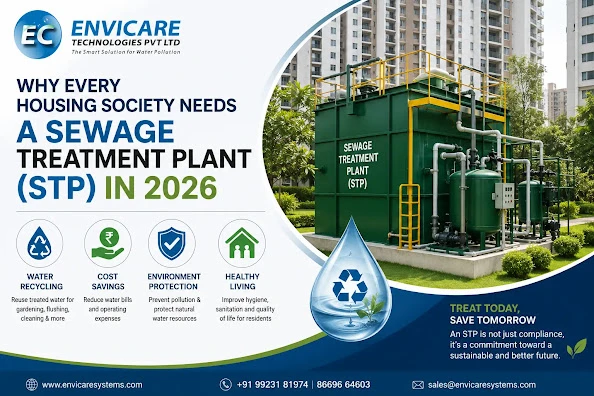
This is why installing a sewage treatment plant for housing society is no longer just an environmental initiative—it has become an essential requirement in 2026. Increasing government regulations, rising water scarcity, and the growing demand for sustainable infrastructure have made wastewater treatment a critical component of every modern residential project.
An efficient STP in housing society not only helps communities comply with environmental regulations but also enables them to recycle water, reduce operating costs, improve hygiene, and contribute to a greener future.
In this article, we’ll explore why every residential society should invest in a modern sewage treatment system, how it works, and the long-term benefits it offers to both residents and the environment.
What is a Sewage Treatment Plant (STP)?
A Sewage Treatment Plant (STP) is a specialized wastewater treatment system designed to collect, process, and purify domestic sewage generated from residential buildings. The wastewater from kitchens, bathrooms, toilets, laundry areas, and common utility spaces is treated through a series of physical, biological, and chemical processes before it is safely discharged or reused.
A modern stp in housing society removes suspended solids, organic matter, harmful bacteria, viruses, and other contaminants, ensuring that the treated water meets environmental discharge standards. Instead of allowing wastewater to become a source of pollution, an STP transforms it into a valuable water resource that can be reused for non-potable purposes.
With advanced technologies such as MBBR (Moving Bed Biofilm Reactor), SBR (Sequential Batch Reactor), MBR (Membrane Bioreactor), and ASP (Activated Sludge Process), today’s sewage treatment systems are more compact, energy-efficient, and capable of delivering consistently high-quality treated water.
Why Housing Societies Need an STP in 2026
Growing Environmental Regulations
Across India, environmental authorities and Pollution Control Boards are strengthening wastewater management regulations. Residential complexes above specified capacities are increasingly required to install a sewage treatment plant for housing society to ensure that untreated sewage is not discharged into natural water bodies.
Failure to comply with these regulations can result in penalties, operational restrictions, or legal complications. Installing an STP demonstrates environmental responsibility while ensuring that residential societies remain compliant with current and future regulations.
Rising Water Scarcity Across Indian Cities
Water scarcity has become one of the biggest challenges facing urban India. Rapid population growth, declining groundwater levels, and unpredictable rainfall patterns have significantly increased the pressure on freshwater resources.
A water treatment plant for housing society allows treated wastewater to be reused for gardening, toilet flushing, floor cleaning, car washing, and cooling systems. This reduces dependence on municipal water supplies and expensive water tankers while ensuring a reliable supply of recycled water for everyday activities.
For large residential communities, this can save thousands of litres of freshwater every single day.
Long-Term Financial Savings
Although installing an STP requires an initial investment, the long-term financial benefits are substantial.
Housing societies spend significant amounts each month on municipal water, borewell maintenance, tanker supplies, and sewage disposal. By recycling wastewater within the premises, these recurring costs can be reduced considerably.
In many cases, the savings generated through water reuse help recover the installation cost over a few years, making an STP a financially sound investment rather than an expense.
Environmental Protection
Untreated sewage contains organic pollutants, harmful microorganisms, nutrients, oils, and suspended solids that can severely damage the environment.
When wastewater is released without treatment, it pollutes rivers, lakes, groundwater, and agricultural land. It also reduces oxygen levels in water bodies, affecting aquatic life and disrupting local ecosystems.
A properly designed stp plant in housing society ensures that wastewater is treated according to environmental standards before being reused or safely discharged. This significantly reduces pollution and supports sustainable urban development.
Better Hygiene and Health
Improper wastewater management often results in unpleasant odours, mosquito breeding, clogged drains, and contamination of surrounding areas. These conditions increase the risk of waterborne diseases and create an unhealthy living environment.
Installing an efficient stp for apartment complexes helps maintain cleaner surroundings by ensuring proper wastewater treatment and disposal. Residents benefit from improved sanitation, fewer hygiene-related issues, and a healthier community.
Increased Property Value
Today’s homebuyers are increasingly looking for environmentally responsible residential projects equipped with sustainable infrastructure.
Housing societies that invest in modern wastewater recycling systems are often perceived as well-managed, future-ready, and environmentally conscious. This positive perception can increase property values and make apartments more attractive to prospective buyers and tenants.
Developers also use advanced STPs as a key selling point when marketing premium residential projects.
Supporting Green Building Initiatives
Sustainability has become an important consideration in modern construction. Green building certifications encourage efficient water management, wastewater recycling, and reduced environmental impact.
Installing a water treatment plant for housing society contributes toward achieving sustainability goals while reducing the overall carbon footprint of the residential community.
How Does an STP Work?
Although treatment technologies may vary, most modern sewage treatment plants follow a systematic process.
Wastewater first passes through screening units where large debris such as plastic, cloth, and other solid waste is removed. It then enters an equalization tank that balances the flow and ensures consistent treatment throughout the day.
The wastewater is transferred to a biological treatment chamber where naturally occurring microorganisms break down organic pollutants. This process significantly reduces Biological Oxygen Demand (BOD) and Chemical Oxygen Demand (COD), two key indicators of water pollution.
Next, the treated water moves into a clarification unit where sludge settles at the bottom while cleaner water flows to filtration systems. Sand filters and activated carbon filters remove finer impurities, colour, and odour before the final disinfection stage.
Disinfection using ultraviolet (UV) treatment or chlorination eliminates harmful bacteria and pathogens, making the treated water suitable for reuse in gardening, toilet flushing, landscaping, cooling towers, and various other non-potable applications.
Technologies Used in Modern STPs
Modern residential projects can choose from several advanced wastewater treatment technologies depending on their space availability, budget, and treatment requirements.
- MBBR (Moving Bed Biofilm Reactor): Compact design with excellent treatment efficiency and lower maintenance.
- SBR (Sequential Batch Reactor): Highly effective for residential applications with fluctuating wastewater flow.
- MBR (Membrane Bioreactor): Produces superior-quality treated water suitable for extensive reuse.
- ASP (Activated Sludge Process): A conventional and widely adopted biological treatment method.
- FAB (Fluidized Aerobic Bed): Offers high treatment efficiency while occupying relatively less space.
Selecting the right technology depends on sewage generation, available land, future expansion plans, and water reuse objectives.
Benefits of Installing an STP for Apartment Communities
Installing an STP in housing society offers benefits that extend beyond regulatory compliance. It creates a self-sustaining water management system capable of supporting the community for decades.
Some of the major advantages include:
- Reduced freshwater consumption
- Lower municipal water bills
- Reduced dependence on water tankers
- Safe wastewater recycling
- Compliance with environmental regulations
- Cleaner surroundings and improved sanitation
- Lower environmental impact
- Increased property value
- Enhanced sustainability and community reputation
For large residential developments, these benefits collectively contribute to better operational efficiency and improved resident satisfaction.
Choosing the Right STP for Your Housing Society
Selecting the right sewage treatment plant for housing society requires careful planning rather than simply choosing the lowest-cost solution.
Factors such as daily sewage generation (KLD), number of residents, available installation space, power consumption, maintenance requirements, automation features, treated water quality, and future expansion should all be considered before finalizing a system.
Working with an experienced wastewater treatment company ensures proper design, installation, commissioning, operator training, and long-term maintenance support. A professionally designed STP operates efficiently for years while minimizing operating costs and downtime.
The Future of Residential Wastewater Management
India’s Smart City Mission and increasing focus on sustainable urban infrastructure are transforming how residential communities manage water.
In 2026, modern sewage treatment plants are becoming smarter through automation, IoT-enabled monitoring, remote diagnostics, energy-efficient blowers, and advanced process controls. These innovations reduce manual intervention, improve treatment efficiency, and optimize operational costs.
Future-ready residential societies are no longer treating wastewater as waste—they are treating it as a valuable resource. By recycling and reusing water, housing communities can significantly reduce freshwater consumption while contributing to national water conservation efforts.
Conclusion
Water conservation is no longer an option—it is a shared responsibility. As residential developments continue to expand, efficient wastewater management has become essential for sustainable urban living.
Installing an STP in housing society enables residential communities to recycle wastewater, reduce operational expenses, comply with environmental regulations, improve hygiene, and minimize their environmental footprint. Beyond these practical benefits, it also enhances property value, supports green building initiatives, and prepares communities for future water challenges.
Whether you manage a residential apartment, gated community, or large township, investing in a modern sewage treatment plant for housing society is one of the smartest long-term decisions you can make for both your residents and the environment.
Frequently Asked Questions (FAQs)
1. Why is a sewage treatment plant necessary for a housing society?
A sewage treatment plant for housing society treats domestic wastewater and makes it suitable for reuse in gardening, flushing, landscaping, and cleaning while ensuring compliance with environmental regulations.
2. What is the difference between an STP and a water treatment plant for housing society?
A water treatment plant for housing society treats freshwater for domestic or drinking purposes. An STP, on the other hand, treats wastewater generated within the residential complex and recycles it for non-potable applications.
3. Can treated water from an STP be used for drinking?
No. Standard STP-treated water is intended for non-potable uses such as gardening, flushing, and cleaning. Additional advanced purification systems would be required before it could be considered for drinking purposes.
4. How much maintenance does an STP require?
Routine maintenance includes equipment inspection, sludge removal, blower servicing, water quality testing, chemical dosing (if required), and preventive maintenance to ensure efficient operation and regulatory compliance.
5. How does an STP help reduce water bills?
An STP for apartment communities recycles wastewater for non-drinking purposes, reducing dependence on municipal water supplies and tanker water. This can significantly lower monthly water expenses while promoting sustainable water management.